Rising damp
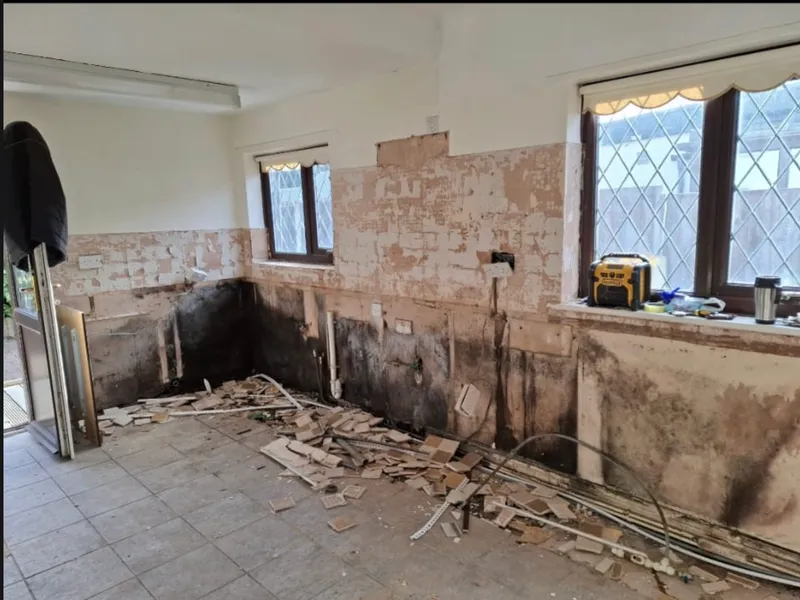
Rising damp is groundwater drawn up through the masonry by capillary action, the way water climbs a tissue dipped in a glass. It stays low on the wall, usually within about a metre of the floor, and leaves a tide-mark, often with white salts and a crumbling plaster surface along the bottom of the wall. It shows year-round, not just in winter.
It is diagnosed far more often than it actually occurs. A good deal of what gets treated as rising damp is condensation or penetrating damp.
Condensation
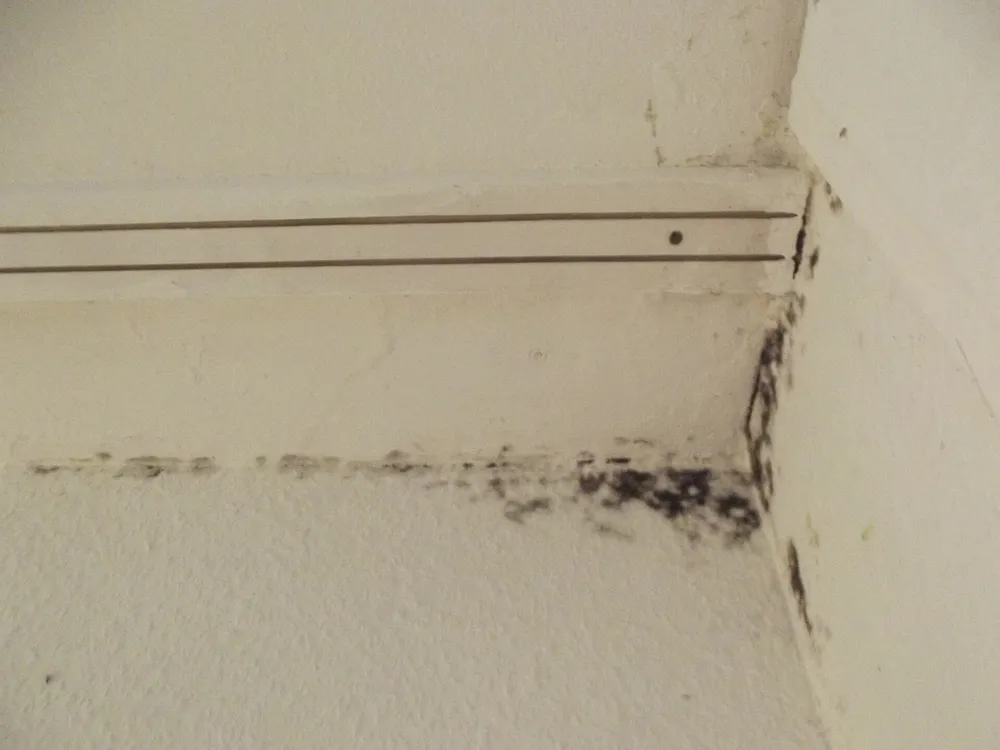
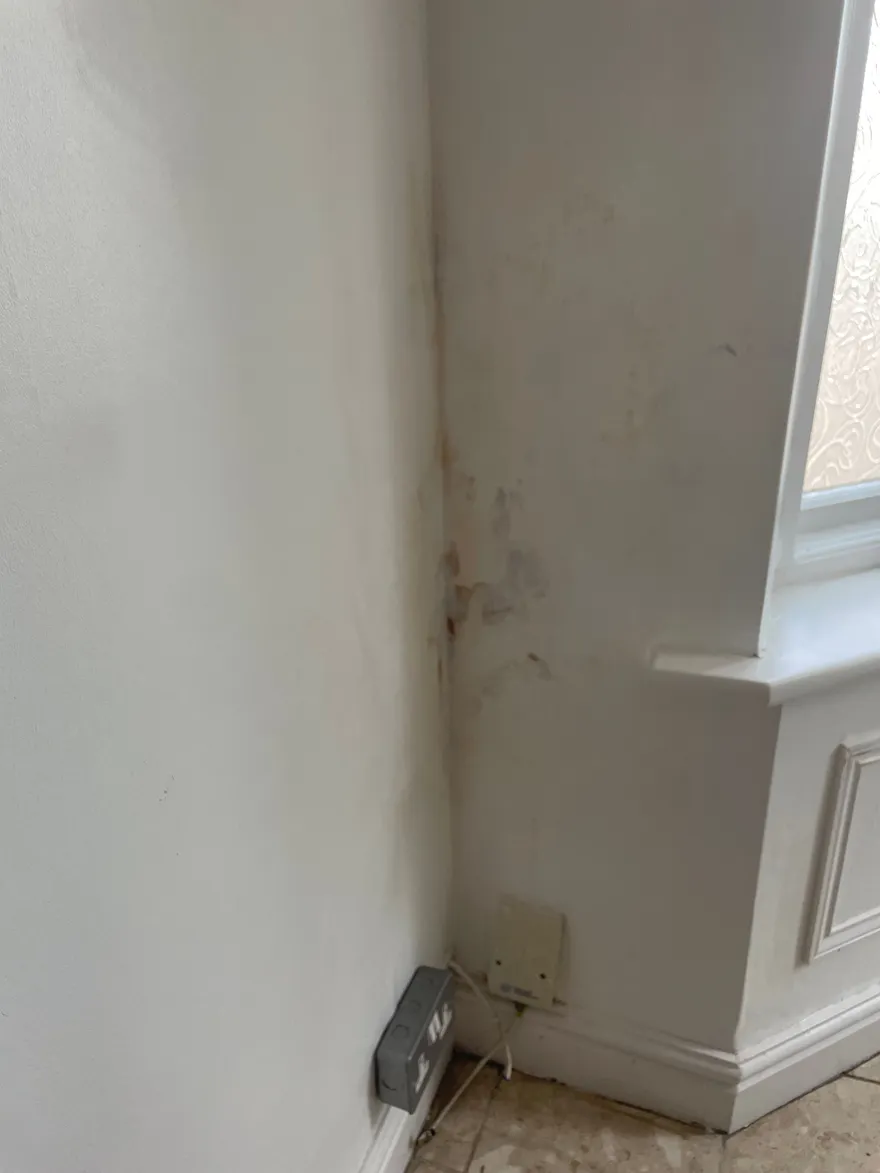
Condensation is moisture from inside the house settling on a cold surface. It is worse in winter, appears in corners, on window reveals, on the walls behind furniture and on the ceiling, and often shows as black spot mould. The surface feels damp or wet and wipes dry, but the wall inside is not damp. No damp proof course will affect it.
Penetrating damp
Penetrating damp is rainwater crossing the wall or roof from outside. It follows the weather, with patches that darken after rain and dry back between showers, and it can appear at any height, often near a leaking gutter, a downpipe, a chimney, a cracked render or a window. The repair is to the route the water takes, on the outside, not to the plaster inside.
Why a damp meter alone is not enough
A moisture meter is a useful tool, but it measures resistance, and salts in the wall can make a dry wall read high. Conservation guidance notes that high readings are not unusual in old buildings that are virtually dry, because of salts left behind by evaporation, and that rising damp is widely misdiagnosed from a visual impression and a meter reading. Canterbury City Council's guidance says Historic England recommends that damp in a historic building is surveyed by an independent professional such as a chartered surveyor, and Cotswold District Council's guidance points to BS 7913, BS 5250 and BS 6576 as the British Standards that apply.
A quick way to narrow it down
- Low on the wall, same all year, tide-mark and salts: points to rising damp.
- In corners and behind furniture, worse in winter, black spotting: points to condensation.
- Follows the rain, can be any height, near a gutter, chimney or window: points to penetrating damp.
What we see in the area
Rising damp does happen in the older houses of the area: the Victorian terraces of Birkenhead and Liverpool, the red-brick terraces of Wrexham, and the sandstone houses around Heswall and the west Wirral, some of which pre-date damp proof courses altogether. But we see a great many houses in those same streets where the problem turns out to be condensation or a leaking gutter, which is the whole reason we survey and establish the cause before we quote.
If you would rather have it looked at than guess, send a photograph of the wall and we will tell you what we think it is, and quotes are free.