What black mould on a wall usually means
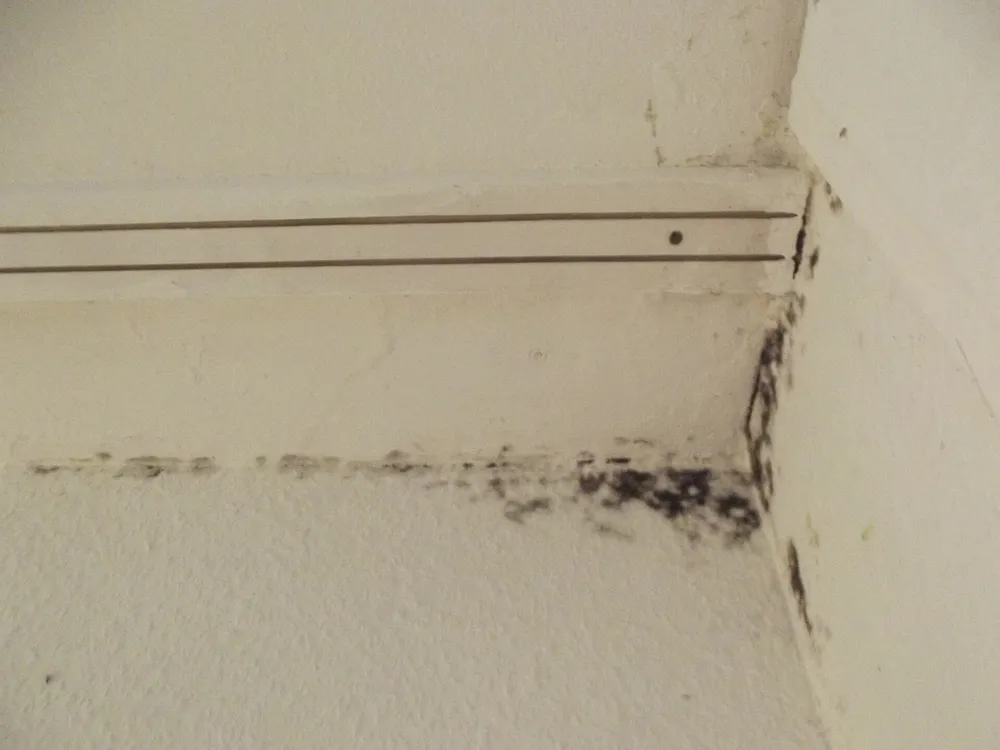
Mould grows where a surface stays damp for long enough. In UK homes the most common reason is condensation: warm air carrying moisture from cooking, showers, laundry and breathing meets a cold surface, and the water settles on it. That is why mould tends to start in corners, on window reveals, behind wardrobes and along the top of external walls.
The government guidance on damp and mould, written after the death of a two-year-old in a mould-affected home in Rochdale, describes the same pattern: moisture, cold surfaces and poor ventilation are the usual ingredients. It also lists the people most at risk from damp and mould, including babies and young children, older people and anyone with a respiratory condition or a weakened immune system.
Cleaning it off safely
Cleaning is worth doing, as long as you do not expect it to be the fix. A few habits make it safer:
- Open a window and keep other people and pets out of the room while you work.
- Wear gloves and a mask, and use a fungicidal mould and mildew wash made for the job, following the label.
- Wipe with a damp cloth. Do not dry-brush or vacuum a mouldy wall, which sends spores into the air.
- Bin the cloth afterwards and wash your hands.
- Do not repaint over it until the wall has dried and the cause has been dealt with. Paint hides mould for a few weeks and then the stain comes through.
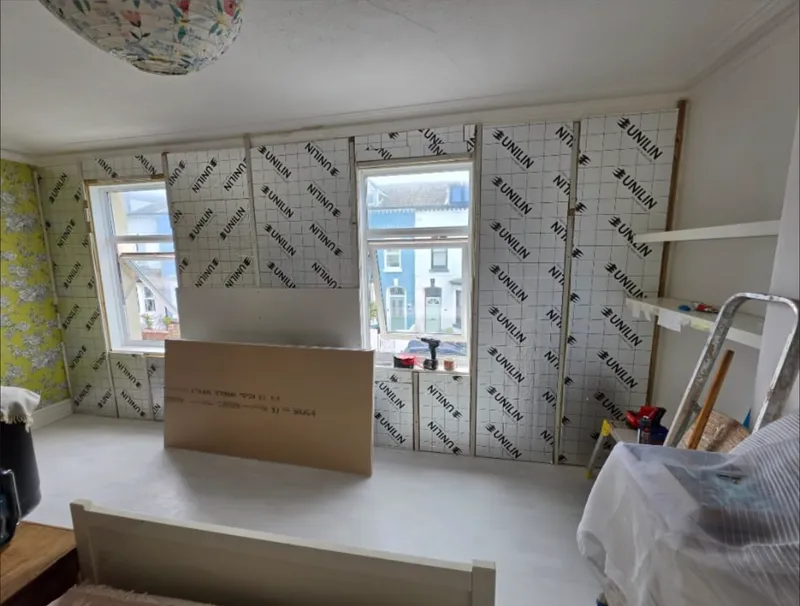
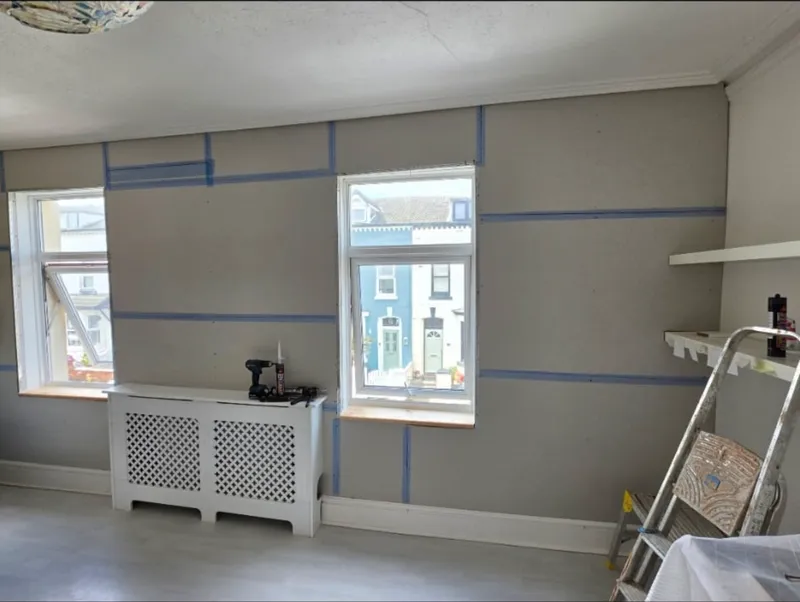
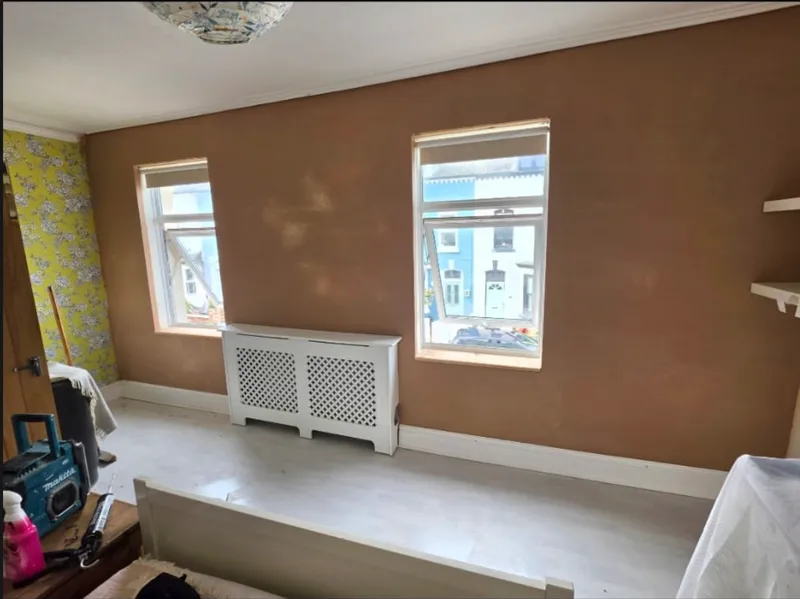
Find where the moisture is coming from
The pattern on the wall points to the cause, and the cause decides the repair:
- Condensation: black spotting in corners, behind furniture and around windows, worse in winter, often wiped away easily and back within weeks.
- Penetrating damp: a patch that darkens after rain and dries back in a dry spell, often near a gutter, a downpipe, a chimney or a window.
- Rising damp: a stain low on the wall, usually with a tide-mark and salts, and rarely with black mould. It is diagnosed far more often than it occurs.
Dealing with the cause
For condensation the fix is almost always to lower the moisture in the air, keep surfaces warmer, or both. Extractor fans in kitchens and bathrooms that actually vent outside, lids on pans, and drying washing somewhere ventilated all help. Keeping a steady background heat is better than short bursts, and a gap behind wardrobes and beds lets air move on the cold wall. A dehumidifier will manage condensation while it runs, but it does nothing for water entering through the masonry.
If the mould returns after you have done all that, or it is spreading across plaster that is blown, flaking or soft, the moisture is probably coming from somewhere you cannot see. That is the point to have the wall looked at, before more plaster is ruined.
Why it is so common on the Wirral, in Liverpool and in Wrexham
Victorian terraces make up a large share of the older housing in Liverpool, Birkenhead and the towns around them, and Wrexham has the same kind of red-brick terraced streets, many built from the brick that Ruabon was known for. Houses of that age usually have solid walls with no cavity, so the inside face of an external wall runs colder than in a modern house. That gives condensation a surface to settle on, which is why black mould is one of the most common calls we get in these areas.
One difference to know about if you rent: the gov.uk guidance linked below is written for England, so it covers Liverpool and the Wirral. Wrexham is in Wales, where the rules for rented homes are set by the Welsh Government, so a Wrexham tenant should ask the council what applies.