Why the old plaster has to come off
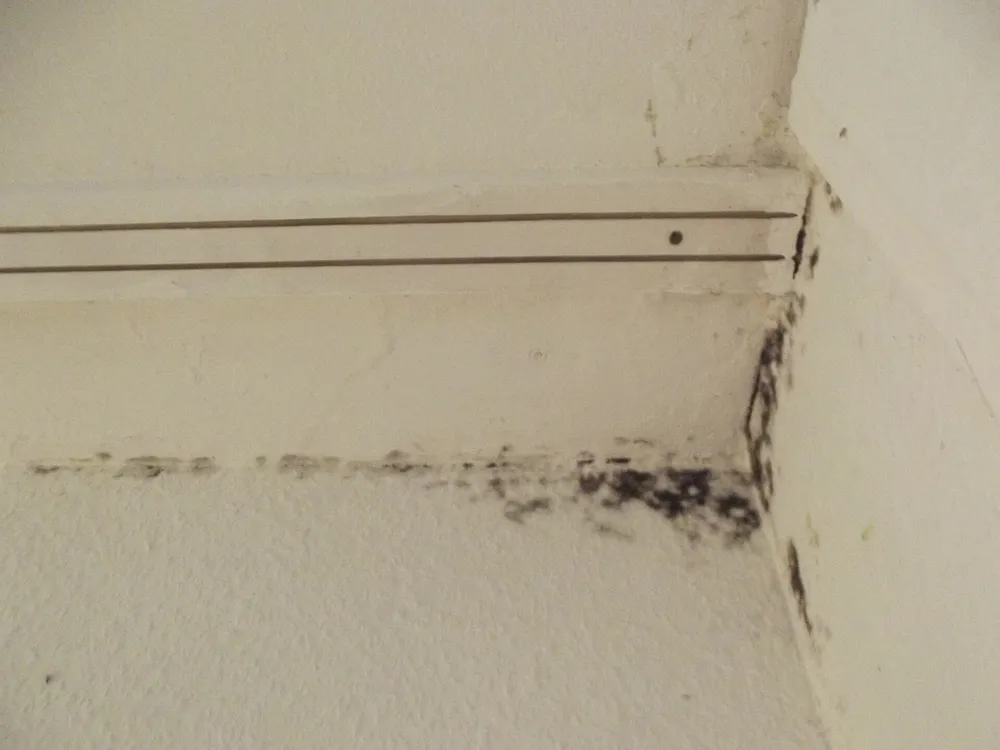
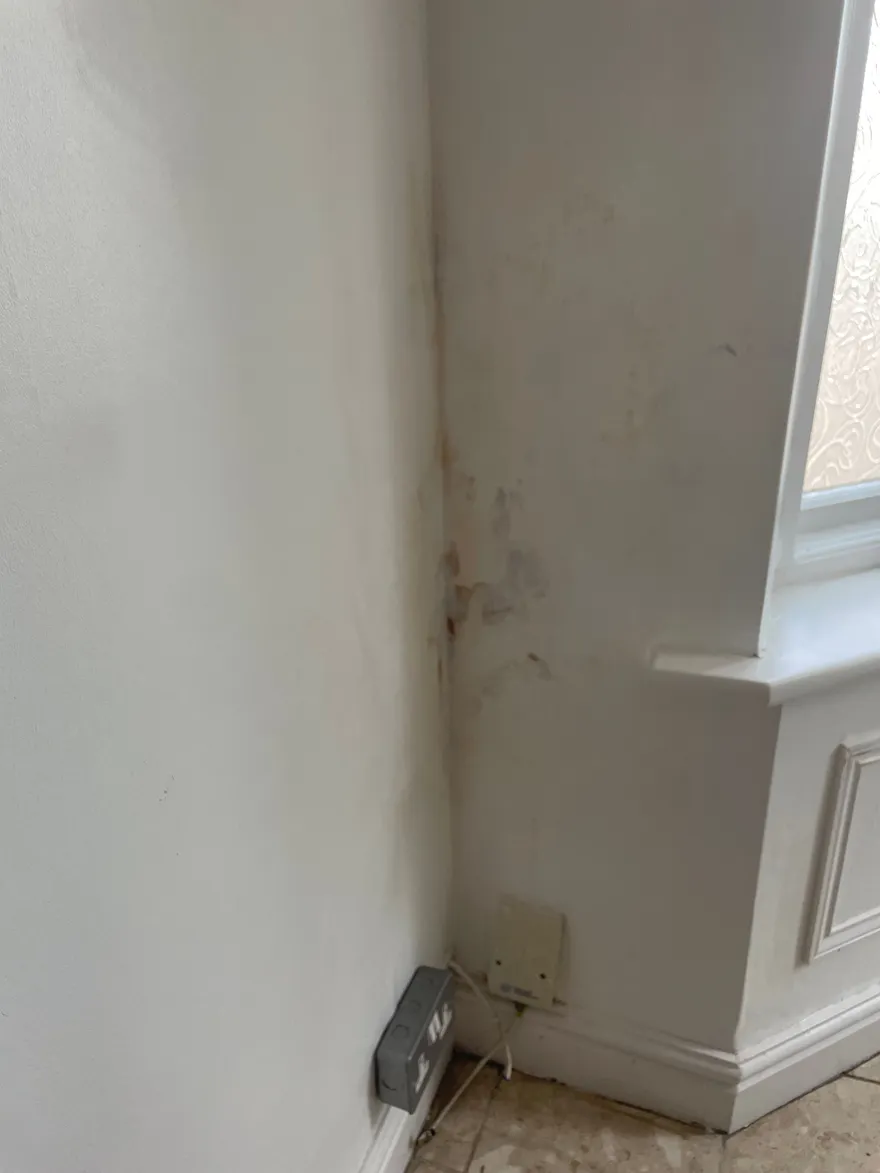
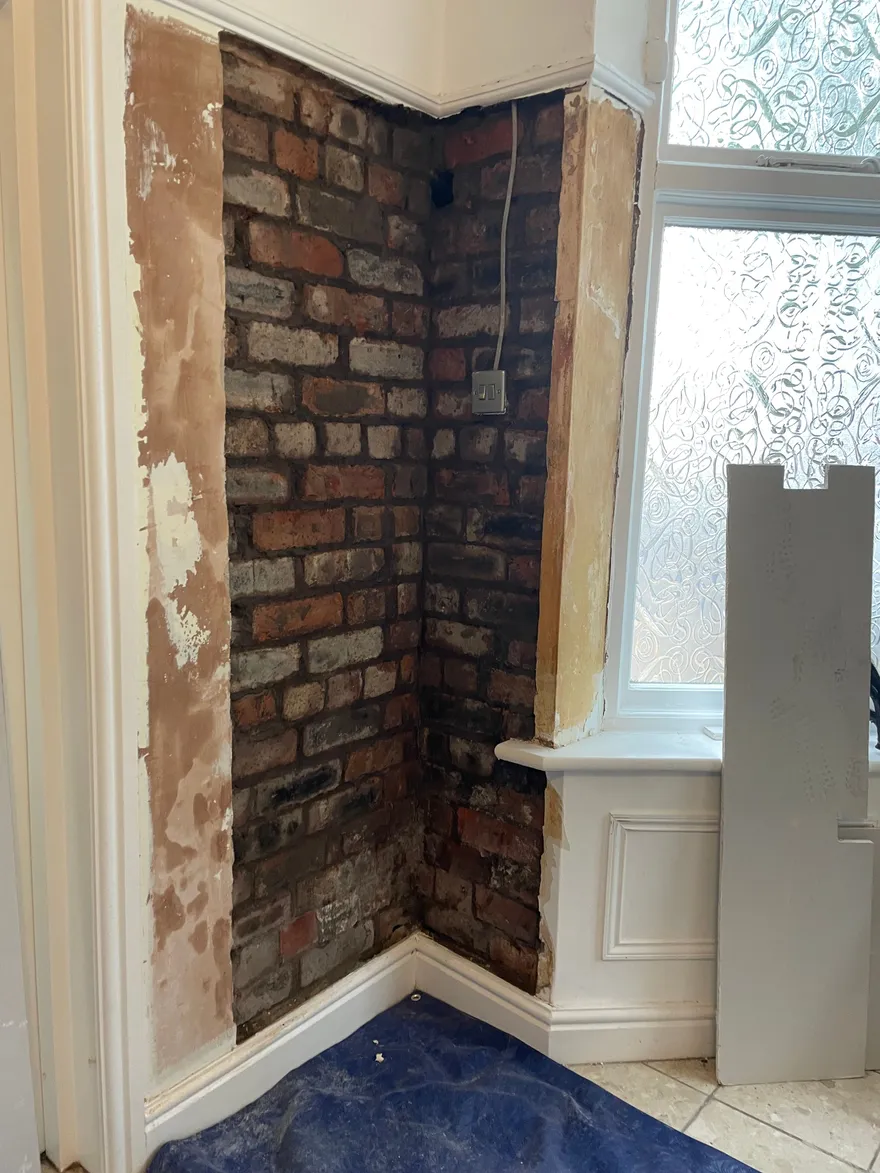
Plaster that has been damp for a long time holds salts drawn out of the masonry, and those salts attract moisture from the air and pull it back through any new finish. Painting over it, or skimming over the top, leaves the cause in place. So the contaminated plaster comes off entirely, back to bare brick or stone, before anything else is done.
The stages, in order
- Establish the cause. The damp is traced to its source (rising, penetrating or condensation) and the repair that fits it is chosen.
- Strip the wall. Contaminated plaster is removed to the height that is affected.
- Treat the wall. For rising damp that means a new damp proof course; for penetrating damp it means the outside defect is repaired and the wall is allowed to dry.
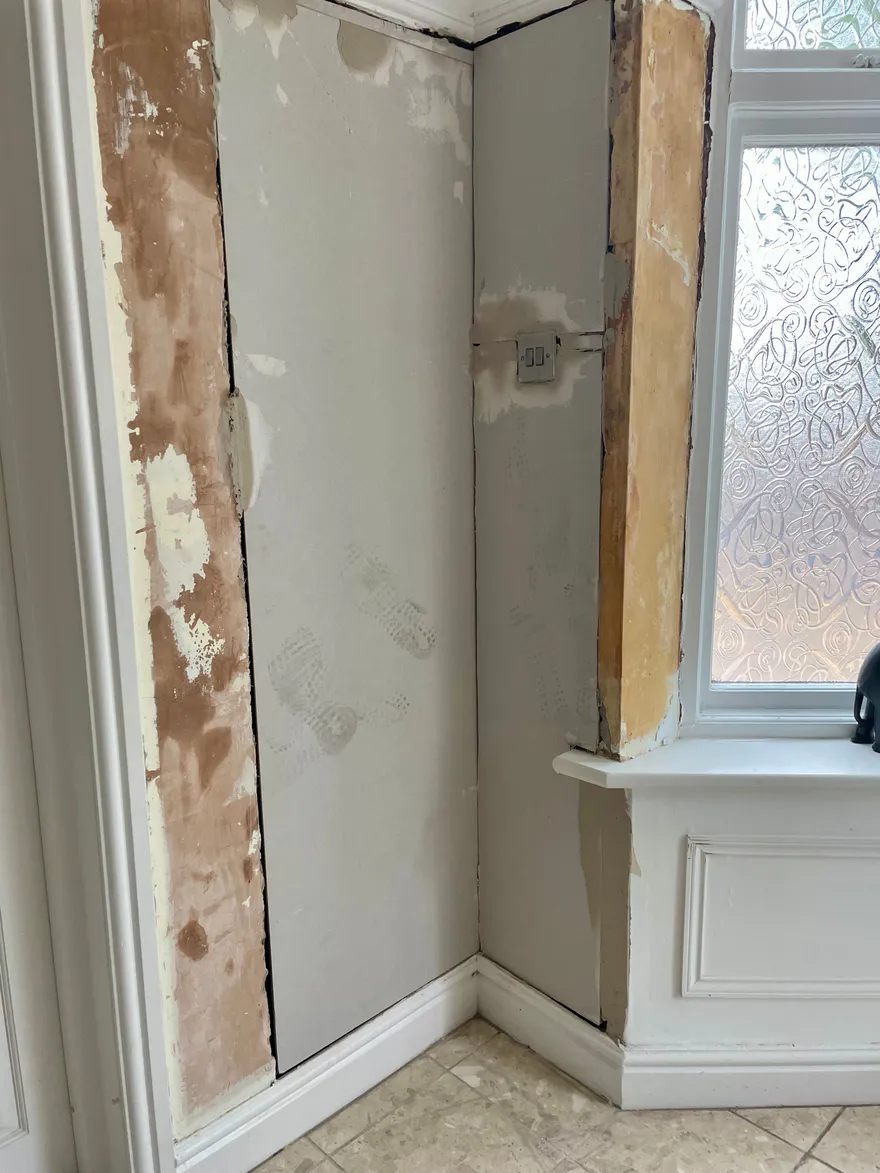
- Prepare the surface. Where it suits the wall, a membrane board is fixed to separate the new finish from the masonry.
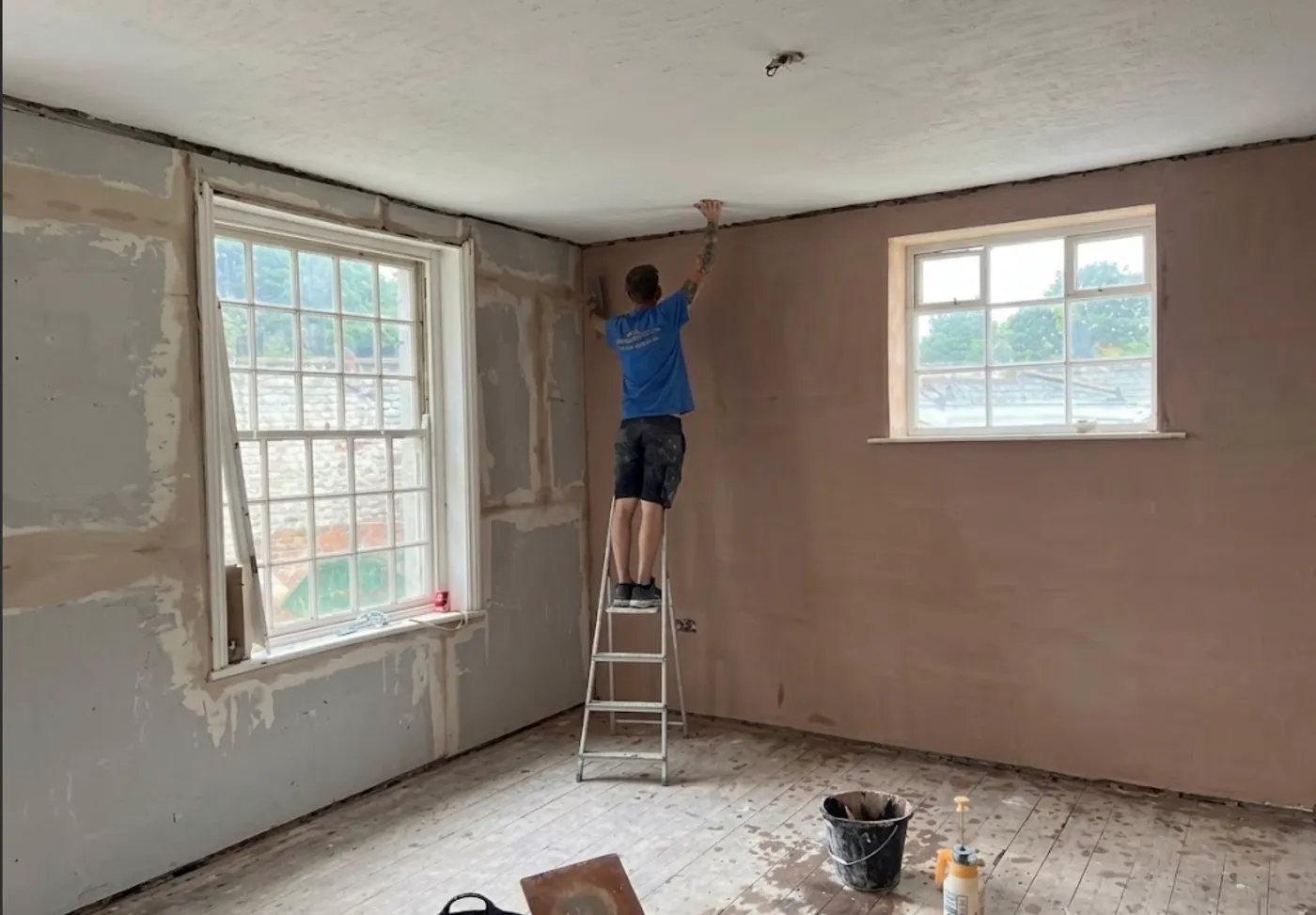
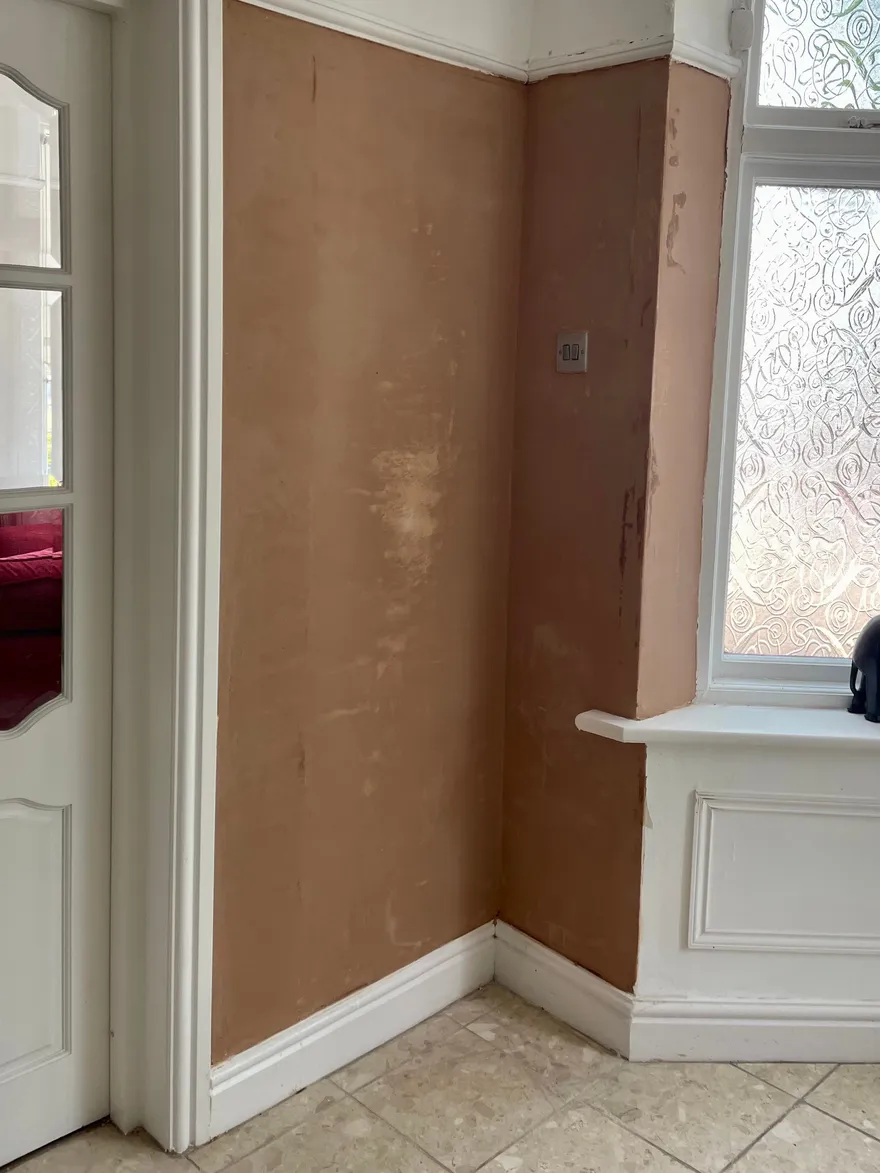
- Replaster. Render or plaster is applied and skimmed flat.
- Dry out, then decorate.
How long it takes
Most single-room damp proofing and replastering jobs are two to four days on site. The drying afterwards takes longer than the work, and the time it needs depends on the wall, so it is something we tell you for your own property.
When can I decorate?
Not straight away. Fresh plaster and render hold a lot of water and must dry right through before they will take paint. Emulsion applied too early seals the moisture in and then flakes off, which is the most common reason people think a repair has failed when it has not.
Why it helps to have the same team do both
When the damp work and the plastering are done by different trades, the gap between them is where mistakes happen: plaster put on before the wall has dried, or a damp proof course cut across by a new finish. We do both, from the first survey to the last coat, so you are not left finding a plasterer afterwards.
Replastering across the Wirral, Liverpool and Wrexham
We are based in Heswall and cover the Wirral, Chester, Liverpool and the Wrexham area. In older houses, from the sandstone of the west Wirral to the Victorian terraces of Birkenhead and Liverpool and the red-brick streets of Wrexham, replastering after damp is a regular part of the job, because many older walls pre-date damp proof courses and the old plaster has held the damp for a long time. Send a photograph of the wall and we can tell you what we would want to look at first.